



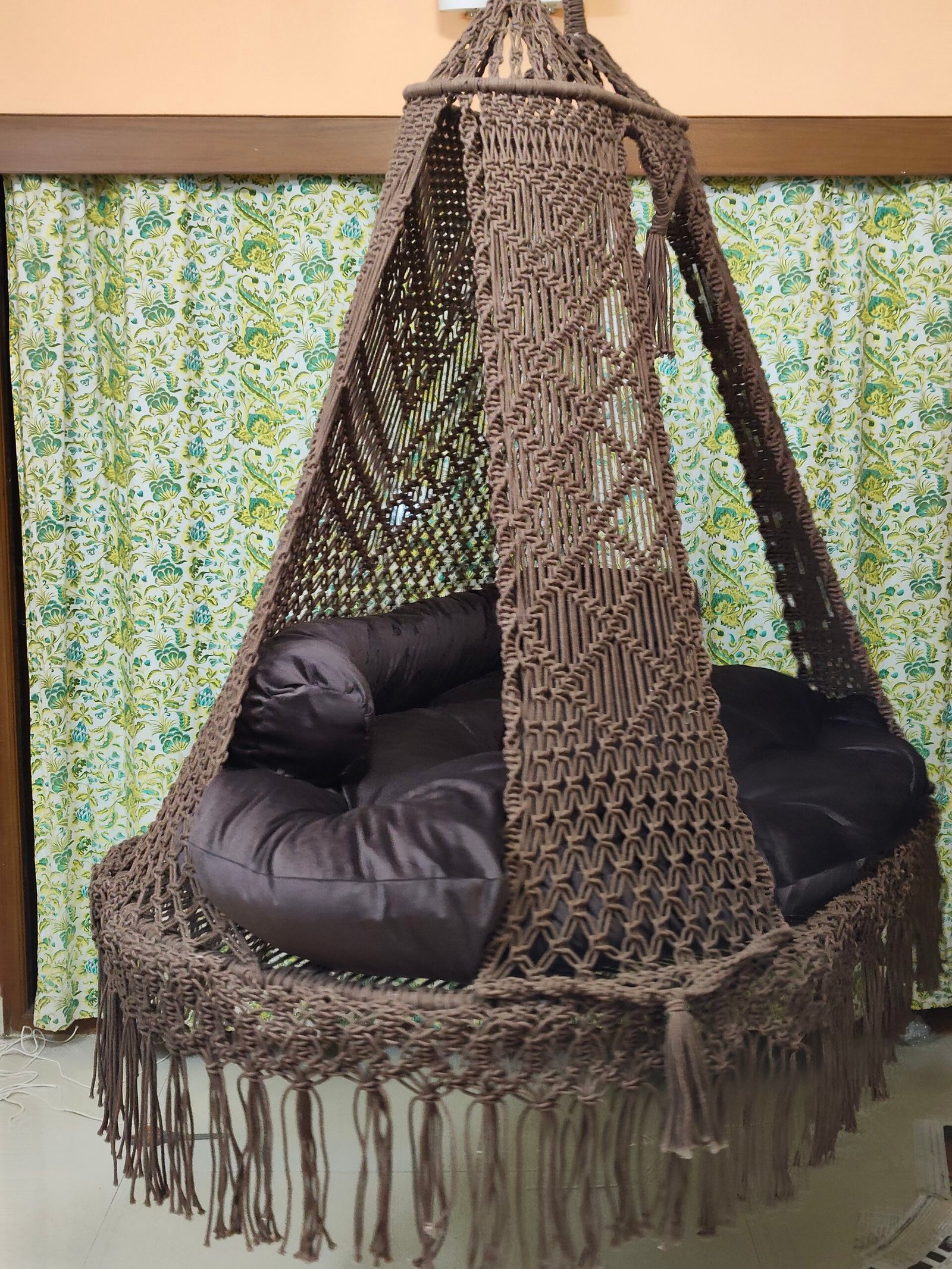
How to Hang a Macramé Swing Safely: Ceiling Hooks, Weight, and Installation
There’s something quietly magical about a macramé swing. It turns an empty corner into a reading nook, a plain balcony into a little retreat, and a bedroom into somewhere you actually want to spend time. But before you enjoy that first gentle sway, you need to answer one important question: how do you hang it safely?
A handmade swing is only as good as the way it’s mounted. Get the hook, the mounting point, and the installation right, and you’ll have a sturdy, long-lasting swing you can relax in with total peace of mind. Here’s a straightforward, step-by-step guide to hanging your macramé swing safely — indoors or on a balcony.
Before You Start: Know the Weight
Every macramé swing has a weight capacity, and yours is no different. Most of our handwoven swings are built to comfortably hold a single adult, but the exact figure depends on the size and the cords used. Check the product details for yours before you plan the install.
Here’s the key point: the hardware, not the swing, is usually the weakest link. A swing that holds 250 lbs needs a hook, a mounting point, and a ceiling structure that can handle that same load — plus a comfortable safety margin. When in doubt, choose hardware rated for more than you think you need. A little extra headroom costs nothing and buys a lot of peace of mind.
Step 1: Find a Stud or Solid Support
A macramé swing should never be hung from drywall alone. Drywall just isn’t strong enough to hold a swinging person, and over time the weight will pull right through it.
Instead, you want to anchor into something solid. The best options, in order:
- A wooden ceiling joist or rafter. This is the ideal mounting point. Use a stud finder to locate it, and mark the center.
- A solid wooden beam. A porch beam, pergola, or exposed ceiling beam is a great choice.
- A solid concrete ceiling or slab. Concrete is very strong, but it needs the right anchor (more on that below).
- A balcony ceiling. Many balconies have solid concrete or steel above them — check what yours is made of before drilling.
If you can’t find a solid mounting point, stop and reconsider. Don’t hang a swing from a location that can’t support the weight. It’s better to move the swing to a safer spot than to risk the whole setup.
Step 2: Choose the Right Hook
The hook is the single most important piece of hardware, so don’t skimp on it. You’re looking for a heavy-duty eye bolt or screw-in hook rated for the swing’s weight — and ideally well above it.
For most home setups, a 3/8-inch or larger eye bolt is a good starting point. Look for:
- A weight rating that comfortably exceeds your swing’s capacity.
- Steel or another strong metal — avoid thin, cheap hooks.
- A long enough threaded section to bite deeply into your mounting point.
For a wooden joist or beam, a screw-in eye bolt with coarse threads works well. For concrete, you’ll need a concrete anchor or expansion bolt designed for the job — these expand inside the hole to grip the material. Follow the anchor manufacturer’s instructions for the correct drill bit size and depth.
Step 3: Install the Mounting Point
Once you’ve found your solid support and chosen your hook, it’s time to install. Here’s the general process:
- Mark the spot. Use a pencil to mark the exact center of your joist or beam.
- Drill a pilot hole. This makes driving the hook easier and prevents the wood from splitting. Use a drill bit slightly smaller than your hook’s threaded section.
- Drive the hook in. Screw the eye bolt into the pilot hole by hand or with a wrench, turning it until the eye is fully seated against the surface. Make sure the eye faces the direction you want the swing to hang.
- For concrete: drill the correct-size hole, clean out the dust, and set the anchor according to its instructions before attaching the hook.
Take your time here. A hook that’s not fully seated or not anchored into solid material is the most common cause of swings coming loose.
Step 4: Hang the Swing and Adjust
With the hook in place, you can hang your swing. Most macramé swings attach with a metal ring or carabiner at the top that clips onto your hook — check how yours is designed.
Once it’s up, give it a gentle test before you fully commit:
- Check the height. Sit in the swing and make sure your feet can reach the floor comfortably. Adjust the hang height if needed so it’s easy to get in and out of.
- Check the movement. The swing should move freely in the direction you want. Make sure it won’t bump into walls, furniture, or door frames as it sways.
- Check the cords. Give the top cords a quick look to confirm they’re seated properly and not twisted or rubbing against anything sharp.
Step 5: Test It Gently
Before you settle in for a long read, do a careful test. Sit down slowly, put a little weight on it, and rock gently. Listen and feel for any creaking, shifting, or movement in the hook or mounting point. If anything feels loose or sounds wrong, take the swing down and re-check your installation before using it again.
Once everything feels solid, you’re good to go.
Safety Tips to Keep in Mind
- Never hang from drywall or plaster alone. Always anchor into a stud, beam, or solid concrete.
- Check your hardware regularly. Give the hook and mounting point a quick look every few months, especially if the swing is outdoors in changing weather.
- Mind the surroundings. Keep the swing away from sharp edges, glass, and hard furniture that could be hit while swinging.
- Follow the weight limit. A swing is designed for a certain load — don’t exceed it.
- Supervise children. Macramé swings are lovely for kids, but they should always be used under adult supervision.
Enjoy Your Handmade Swing
Hanging a macramé swing safely doesn’t take special skills — just the right hardware, a solid mounting point, and a little patience. Take the time to do it properly, and you’ll have a beautiful, handmade piece you can relax in for years to come.
At ProKnots, every swing is handwoven by skilled artisans from high-quality cotton cords, built to be both beautiful and durable. Once yours is safely hung, all that’s left is to grab a cushion, make a cup of tea, and enjoy your new favorite spot in the house.