



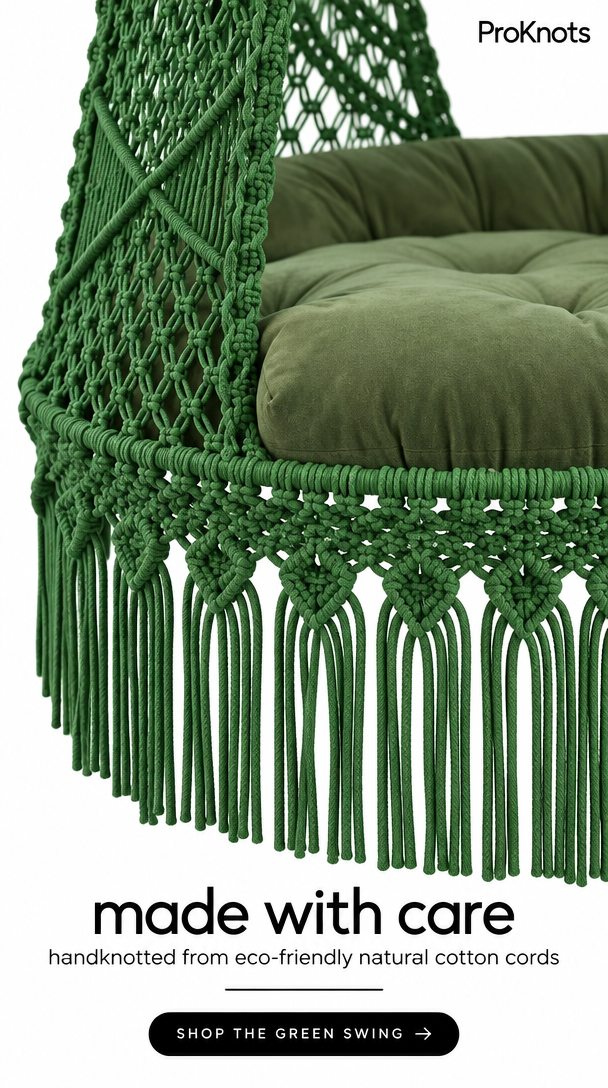
Every home has one: the corner that never quite earns its keep. Maybe it sits between the wardrobe and the window, too narrow for a sofa, too visible to leave empty. Here’s the good news – awkward corners make wonderful reading nooks. They’re quiet, they’re already out of the way, and with the right piece of handmade seating, they become the spot everyone gravitates to at the end of the day.
In this guide we’ll walk through how to turn that leftover corner into a boho reading nook, from measuring the space to layering in texture, light, and plants. If you’ve been browsing hanging swings and wondering whether one will fit, this is the place to start.
Why an Awkward Corner Is the Best Spot in the House
A reading nook doesn’t need a spare room. It needs a corner that feels slightly set apart from the rest of the house.
Corners already do three useful things: they break sightlines, they collect soft light in the late afternoon, and they give you a natural sense of “this is my spot.” Add a hanging chair or swing and you’ve turned dead space into the most inviting seat in the room – and the one piece of furniture guests always ask about.
Choosing handmade seating for that corner also means you’re not fighting mass-produced furniture for the same footprint. Macramé swings and chairs are handwoven, lightweight, and designed to make small spaces feel open rather than crowded.
Measure First: Three Numbers That Decide Everything
Before you fall in love with a swing, take these three measurements.
1. Corner width and depth
Measure across the back wall and out to where the corner opens into the room. This tells you the widest swing you can hang without it feeling wedged in.
2. Ceiling height and available hanging height
Measure from floor to ceiling, then subtract the height of the seating itself plus a comfortable clearance. As a rule of thumb, you want at least 60-70 cm of clear space between the seat and the floor for easy sitting and standing.
3. Doorway and turning clearance
If the corner is anywhere near a door or walkway, leave enough room for the swing to rest without being bumped.
Write the numbers down. Then match them to a size: 35 inches for snug corners, 40-50 inches for a generous single seat, and 60 inches and up for a swing you can genuinely curl up in.
The Seven-Step Boho Reading Nook Recipe
Here’s the full build, in order.
1. Start with the seating
The swing is the anchor of the whole corner, so choose it first. Natural cotton cords in a neutral tone keep the palette calm and let the cushions do the colour work. If your walls are pale, a black or dark brown swing adds contrast and definition; if the room is already rich in colour, a white or natural finish keeps it airy.
2. Ground the corner with a rug
A round jute or woven rug under the swing immediately makes the corner feel intentional rather than accidental. It also softens the acoustics and marks out the nook’s boundaries without a single wall.
3. Layer cushions where your back and elbows land
A firm seat cushion for support, plus two or three softer cushions and a rolled tube cushion behind the lower back. Mix one texture – a boucle or woven stripe – with plainer cottons so it looks collected, not matchy.
4. Add warm, dimmable light
Overhead lights flatten a nook. Instead, place a floor lamp with a warm bulb just behind the swing, or clip a small reading light to the wall. Layered low light is what makes a corner feel like a retreat after dark.
5. Bring in one or two plants
A trailing pothos on a shelf above, or a tall plant tucked beside the swing, adds the organic softness boho interiors are known for. Keep them to one or two so the corner still breathes.
6. Style the wall behind the swing
This is where handmade texture really shines. A macramé wall hanging, a woven mirror, or a slim picture ledge gives the eye something to rest on without competing with the swing.
7. Finish with a small side surface
A stool, a slim side table, or a wall-mounted shelf gives you somewhere to land a mug, a candle, or the book you’re halfway through. Keep it small – the swing should stay the hero.
Ideas by Room
Bedroom corner
The quietest option. Pair a 40-inch macramé chair with a floor lamp and a sheer curtain, and you have a wind-down spot that isn’t your bed.
Balcony or covered patio
Choose a natural or grey swing, add an outdoor rug and a weather-friendly cushion, and keep plants in lightweight pots you can move with the seasons.
Living room corner
Go bigger here – a 50- to 60-inch swing or a twin swing shares the space with the rest of the room and gives you a genuine second seat for guests.
Kids’ or nursery corner
A smaller swing or a macramé cradle keeps the same handmade warmth at a scale that suits the room.
Five Mistakes to Avoid
- Hanging the swing too low or too high instead of measuring clearance first.
- Choosing a swing that’s too large for the corner, so it never stops swinging freely.
- Using a cool white bulb – it kills the cosy mood instantly.
- Filling every surface. Leave some breathing room.
- Skipping the anchor check. Always hang from a properly rated beam or ceiling mount, and follow the fitting guidance for your ceiling type.
Bring the Corner to Life
A boho reading nook isn’t about buying more things. It’s about giving one overlooked corner three things it’s missing: somewhere soft to sit, warm light, and a little handmade texture.
Start with the measurements, choose a swing that fits the space you actually have, then layer in the rug, cushions, light, and plants one step at a time. Handwoven pieces are made slowly and by hand – which is exactly why they belong in the corner you’ll use most.